Athar - Shubbak

A bilingual living archive that brings oral history, community contribution and place into one enduring cultural product.
The project
Athar is a bilingual, audio-first living archive for Shubbak Festival. I led the product strategy, experience design, full-stack build and infrastructure, creating one cultural product that could collect anonymous community traces, publish oral histories and connect memory to place across London, then keep evolving beyond the exhibition. Presented at the V&A during Shubbak’s 15th-anniversary celebrations.
Shubbak is London's biennial festival of contemporary Arab culture and arts. They commissioned Athar as part of their Voices of Resilience programme, documenting heritage and oral histories across Brent and Westminster.
- Year
- 2026
- Timeline
- Multi-phase build with ongoing stewardship
What I worked on
- Product Strategy
- Experience & Interaction Design
- Full-Stack Product Build
- Bilingual & RTL Experience
- Community Submission & Moderation
- Audio & Map Experiences
- Infrastructure & Stewardship
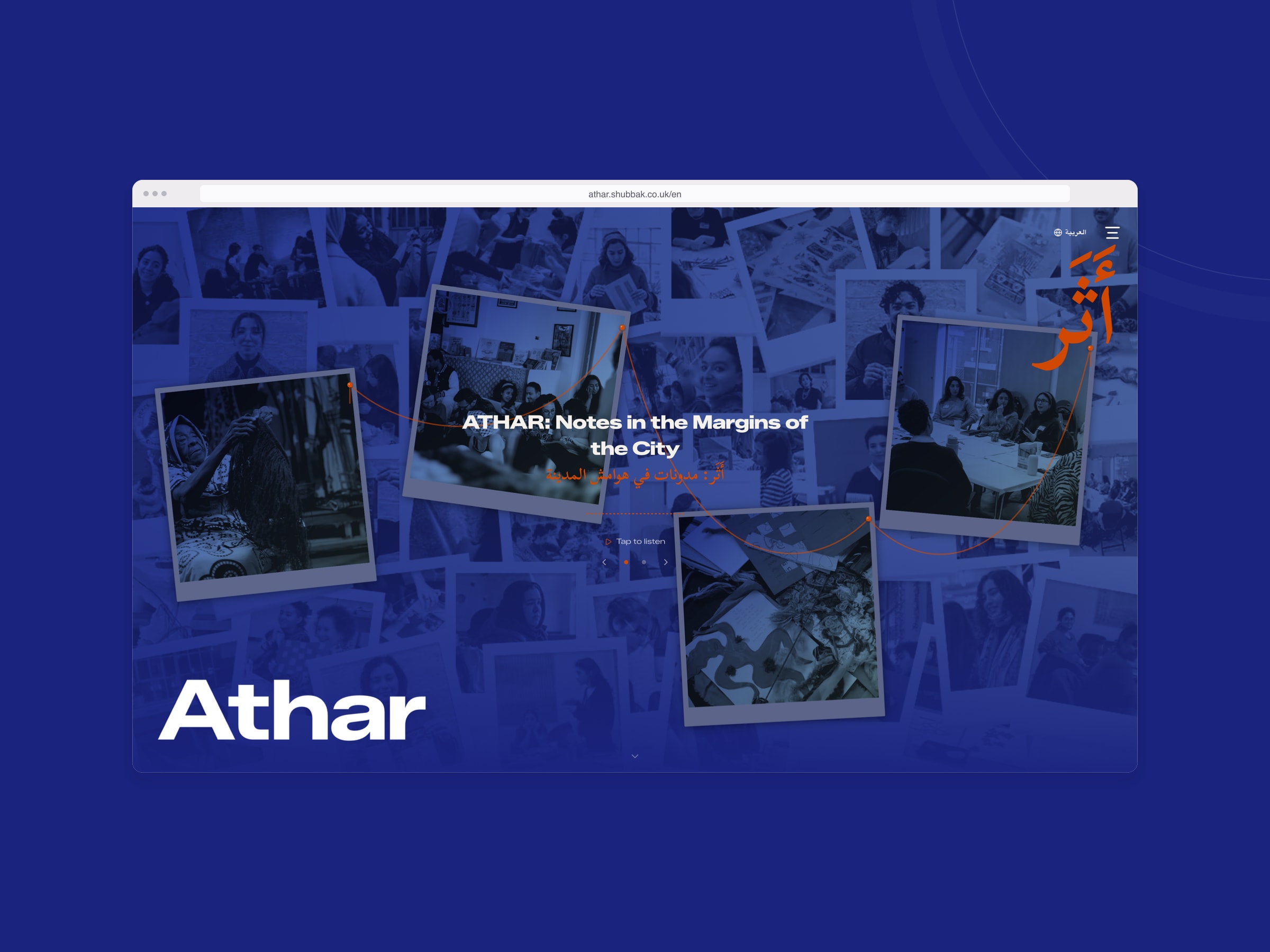
This was never meant to be a campaign website.
Shubbak commissioned Athar to document Arab and SWANA heritage across Brent and Westminster. The digital experience had to do two different jobs over time: invite people to leave anonymous traces before the exhibition, then become an immersive archive for oral histories, images and place. I treated those as connected states of one product, designed to gather memory and preserve it rather than simply promote an event.
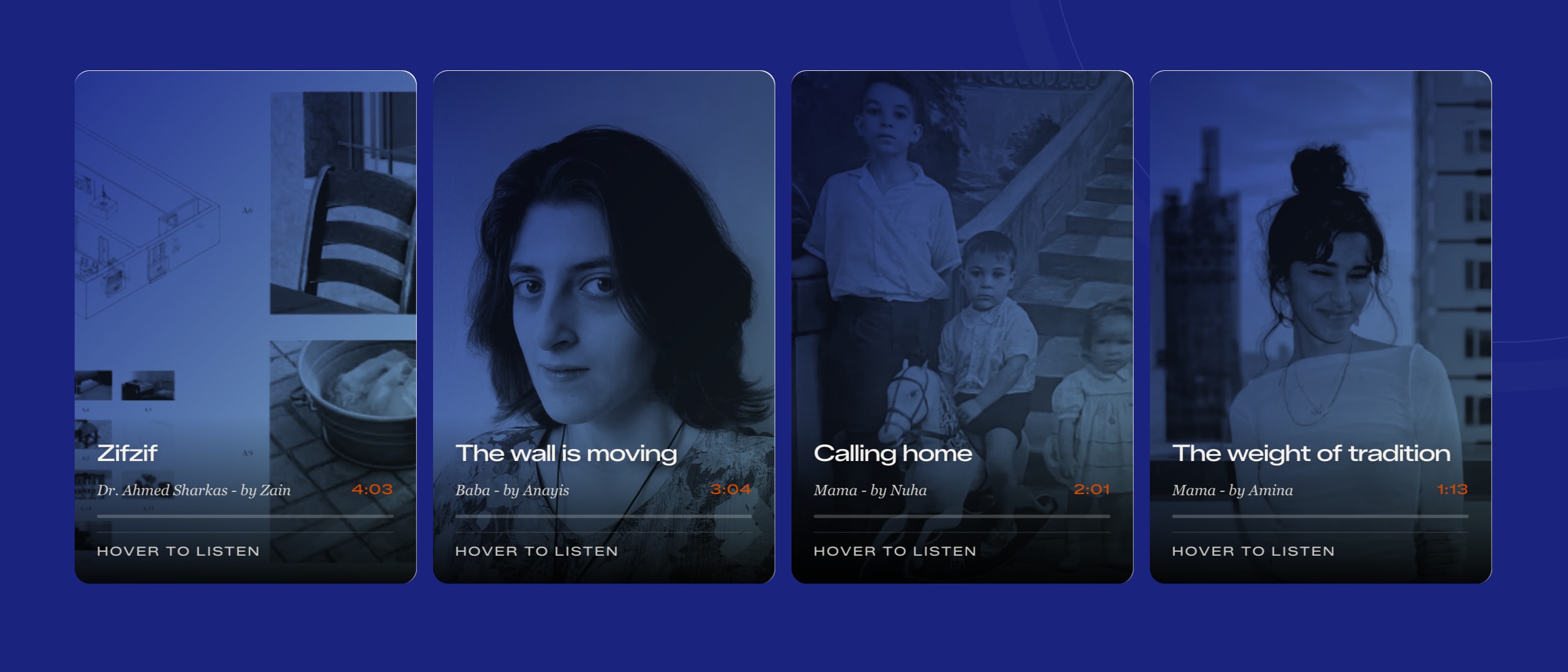
Design the archive around listening.
The oral histories are the heart of Athar, so I resisted presenting them as a conventional content feed. Story cards borrow cues from cassette players, waveform controls make listening tangible, and transcripts and context sit alongside photography. The interaction and pacing are deliberately quiet, helping each voice lead the experience rather than the interface.
Make contribution feel safe, not extractive.
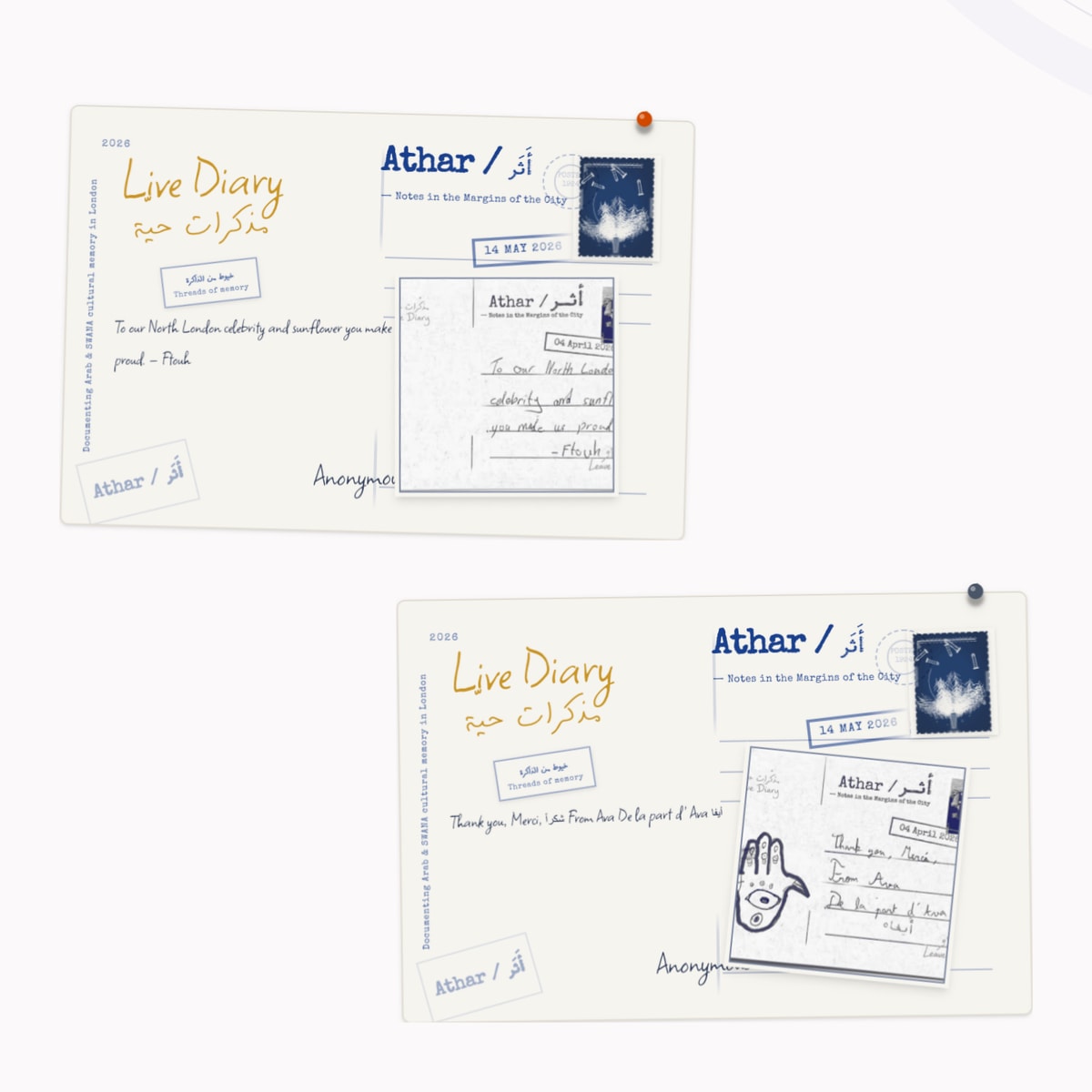
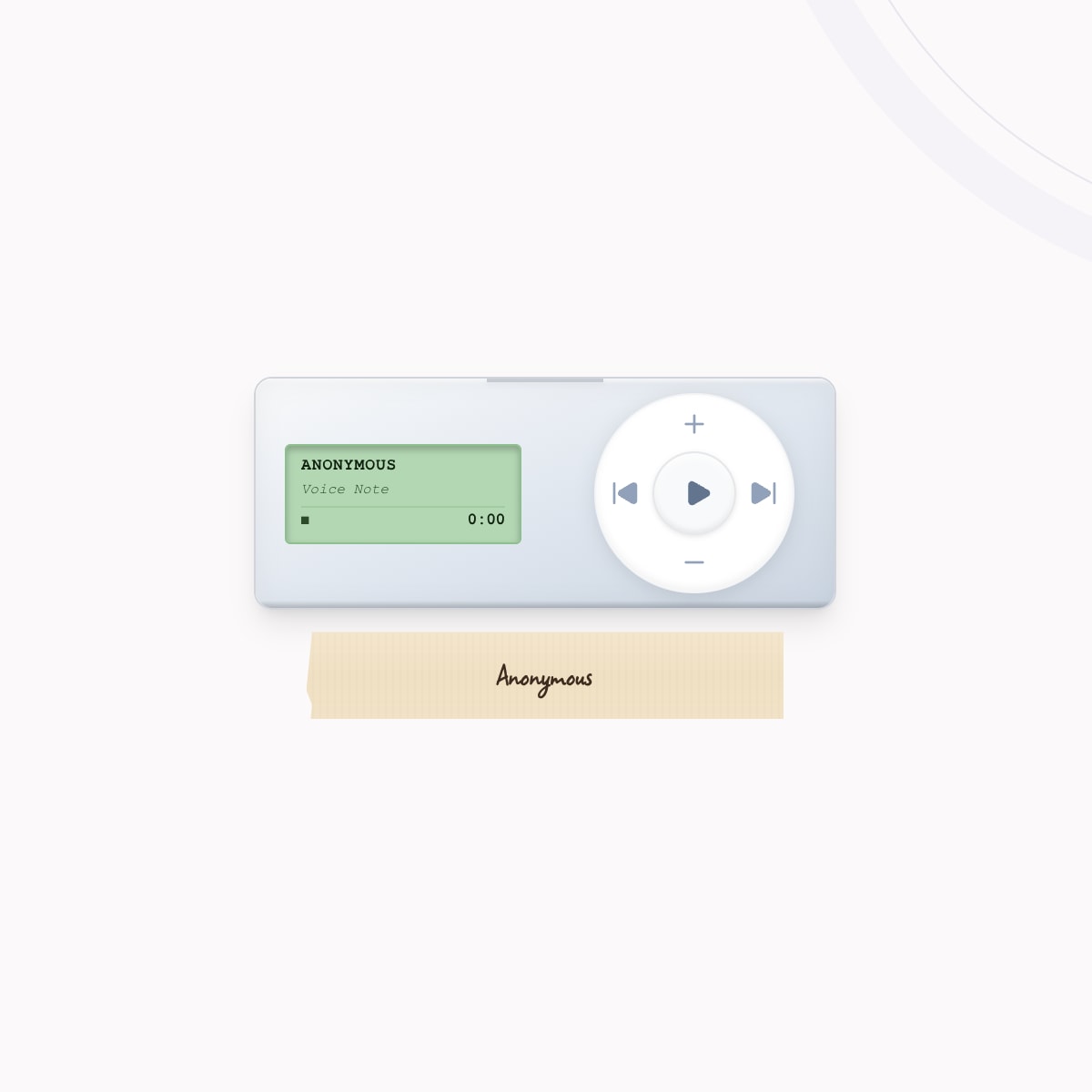
The Live Diary accepts written fragments, photographs and voice recordings captured in the browser. People can contribute without an account, use a pseudonym if they wish and decide how their trace is shared through clear consent choices. Every submission enters moderation before publication. I designed that journey to reduce pressure while giving the curatorial team the controls needed to handle community material responsibly.
Make place part of the archive.
Memory is tied to streets, homes and neighbourhoods. I modelled oral histories with location data and built a map-led route with polaroid-style markers and story previews, connecting voices to places across Brent and Westminster. The archive can be explored through geography as well as chronology, giving the city an active role in how the stories are understood.
Bilingual means redesigning the experience, not translating labels.
The platform supports English and Arabic across navigation, contribution flows, stories, transcripts and editorial tools. I built proper right-to-left behaviour, paired type systems and language-aware layouts so the interface is designed to give both languages equal prominence. That was a product decision because the archive belongs to the communities it represents.
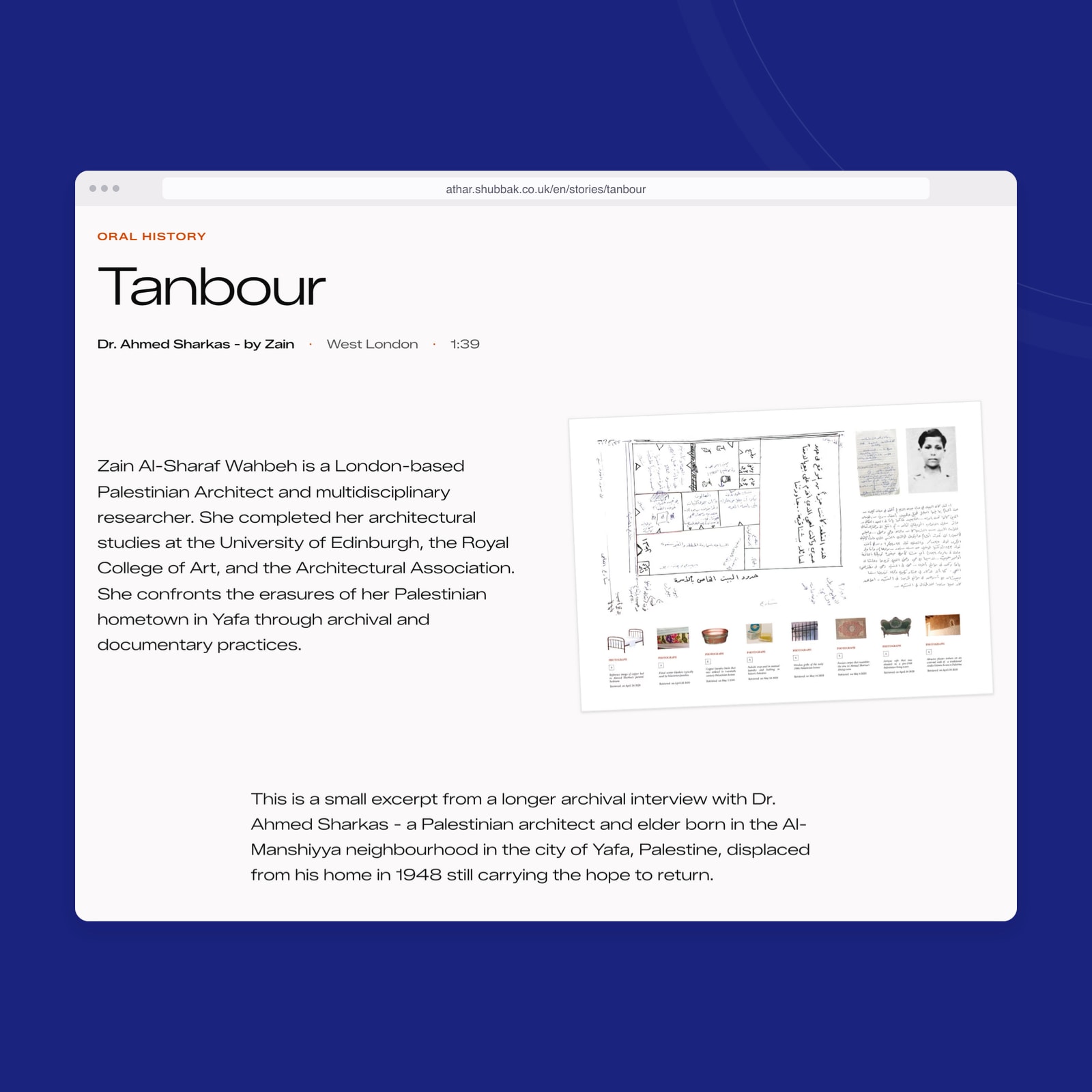
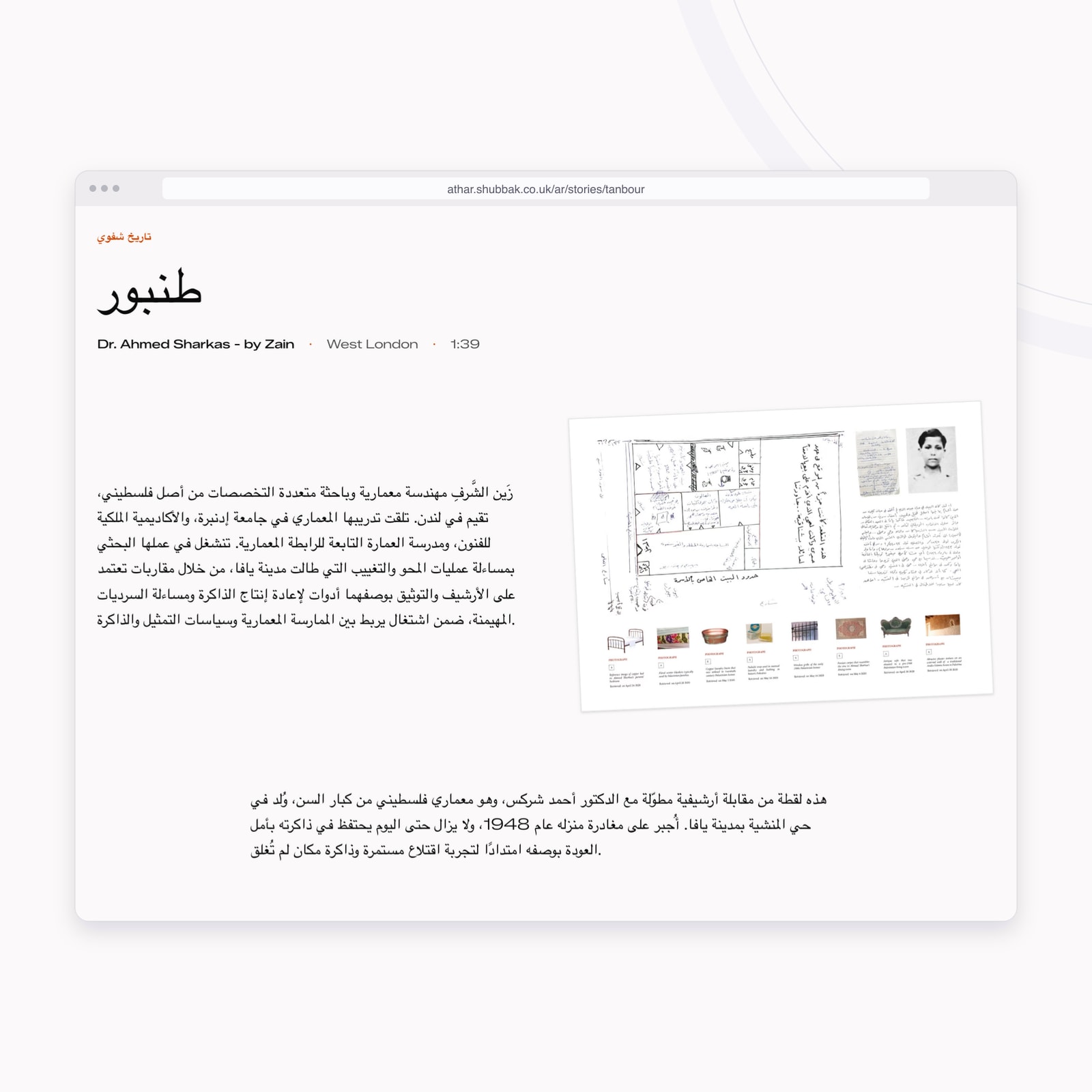
Editorial control without pretending the technical work disappears.
Shubbak can create and order oral histories, attach audio and timed transcripts, manage bilingual pages and funder credits, moderate community submissions, and move the public experience between collection and archive modes. That is more than a generic CMS: it is an operating model for the archive. Day-to-day curatorial control sits with the team, while specialist maintenance and infrastructure remain separate responsibilities.
Give Athar its own digital visual language.
I translated the curatorial principles into product decisions: many fragments rather than one monumental statement, community voices ahead of institutional branding, and a contemplative rhythm instead of attention-seeking motion. Burnt orange, cyanotype imagery, postcard surfaces and cassette-inspired controls make the archive feel tactile and specific without competing with the material it holds.
From a digital archive to an experience at the V&A.
On 31 July 2026, Athar was presented at V&A South Kensington during Friday Late x Shubbak: Body as a Vessel. Visitors explored the archive on tablets and listened through headphones as part of Young Shubbak’s wider presentation. For me, this was a meaningful milestone: the digital platform I had designed and built was supporting a shared, physical experience. The stories, listening controls and visual language were no longer just elements on a website. They were part of how people encountered the archive in the gallery.
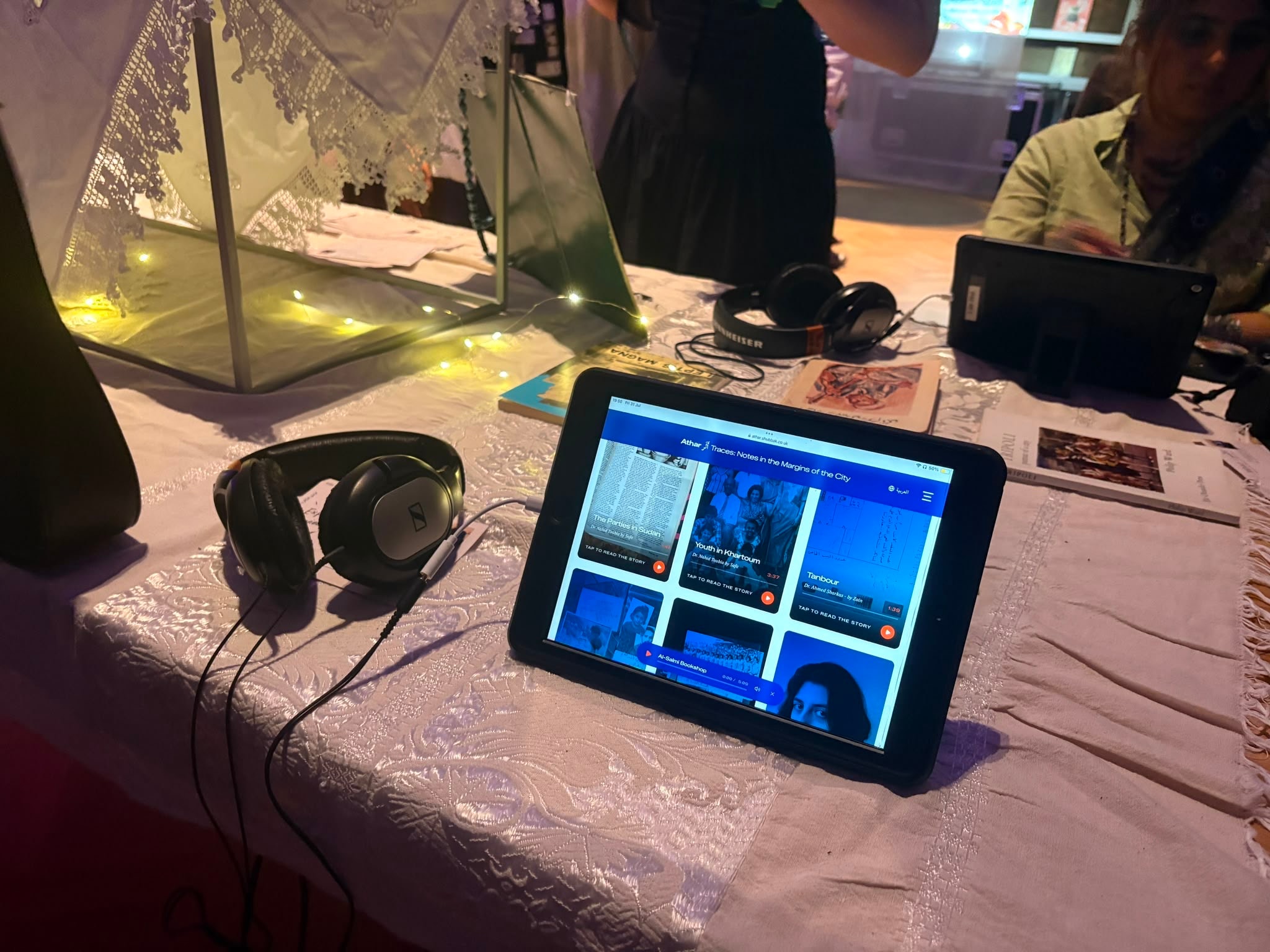
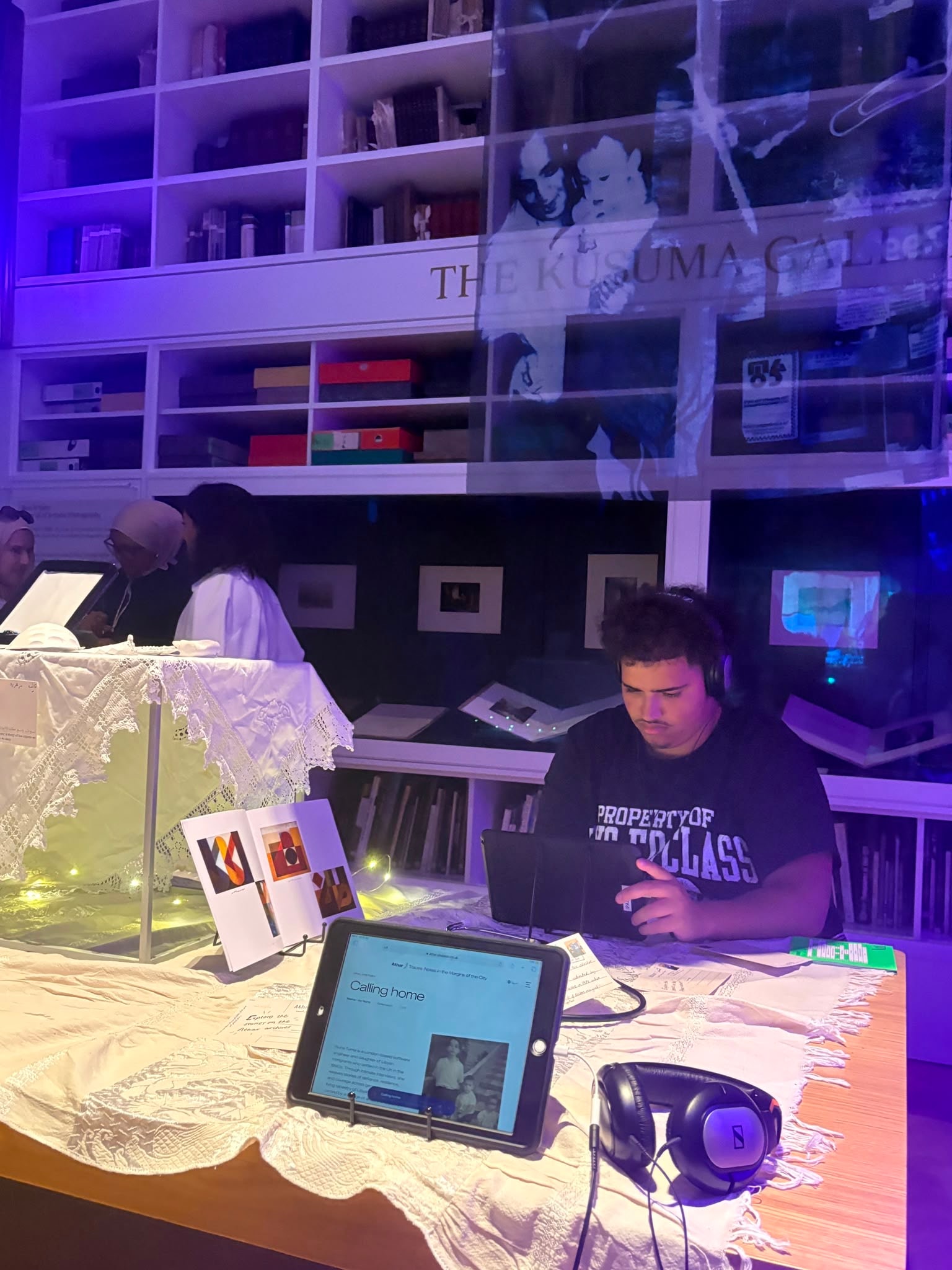
Build for the years after opening night.
The long-term work is mostly invisible in screenshots. I adapted the architecture to Shubbak’s hosting and EU data-residency requirements, added cookieless analytics, access controls and rate limits, and put the production database on scheduled backups with a tested recovery path. Reduced-motion support, accessible form behaviour and bilingual legal content were part of the product too. These decisions are what turn a digital exhibition into a platform that can be responsibly stewarded.
A living archive that can keep accumulating meaning.
Athar is live with oral histories, community postcards and voice notes, bilingual story journeys and an evolving record of memory across London. My role stretched from framing the product and designing its interaction language to building the public and editorial systems, shaping the infrastructure and supporting the platform after launch. That breadth is the point: the archive works because the experience, content model and operational reality were designed together.
A few more ideas, brought to life.

BodhiShree
Helping a coaching and organisation development practice bring its experience online, with a refined identity and the confidence to manage it.
View case study
Athletic AbhyAn
A website brief that grew into a connected coaching platform, with a native app now in development.
View case study